
Agriculture has always been the foundation of human civilization. Every meal we eat, every medicinal herb we use, and every fruit or vegetable we consume begins with healthy soil. Yet, over the past century, modern agriculture has become increasingly dependent on synthetic fertilizers, pesticides, herbicides, and fungicides to maximize crop production.
Chemical fertilizers such as Urea, NPK, and DAP have undoubtedly helped increase agricultural productivity. However, decades of excessive chemical use have also created serious environmental and health challenges that cannot be ignored.
Today, farmers, scientists, environmentalists, and consumers are asking an important question:
Can we continue using chemicals at the current scale without harming our health, our soil, and future generations?
Scientific research increasingly suggests that the answer is no.
At BLOOMYBLISS Organic Farm, we believe agriculture should not only produce food—it should protect nature, restore soil health, and improve the well-being of both people and the planet.
What Are Chemical Fertilizers?
Chemical fertilizers are manufactured products designed to supply essential nutrients such as Nitrogen (N), Phosphorus (P), and Potassium (K) to crops.
The most commonly used fertilizers include:
- Urea (Nitrogen)
- NPK Fertilizers
- DAP (Di-Ammonium Phosphate)
- Potash Fertilizers
- Ammonium Sulphate
These fertilizers provide nutrients rapidly, allowing crops to grow faster. While they can improve short-term yields, they do not improve the biological health of soil.
Unlike compost, farmyard manure, or natural organic matter, synthetic fertilizers contain little or no organic carbon, which is essential for maintaining living soil ecosystems.
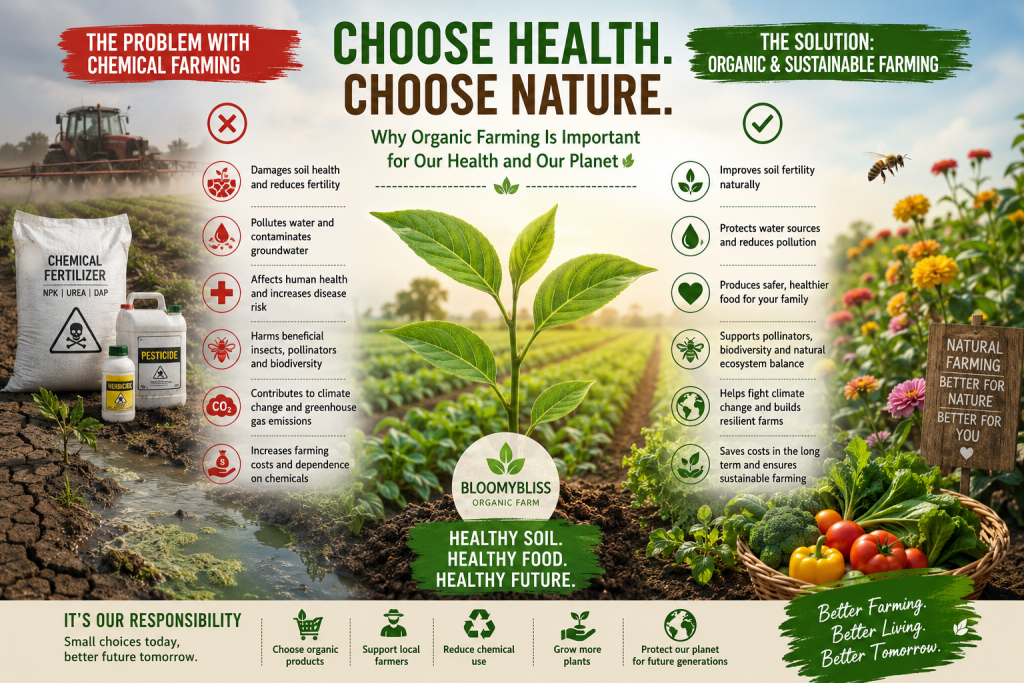
The Harmful Effects of Chemical Fertilizers on Soil
1. Loss of Soil Fertility
Healthy soil contains billions of bacteria, fungi, earthworms, insects, and microorganisms that naturally recycle nutrients and support plant growth.
Continuous dependence on chemical fertilizers gradually reduces this biological diversity.
As soil organisms decline:
- Nutrient cycling slows down.
- Organic matter decreases.
- Soil structure weakens.
- Water retention declines.
- Crops become increasingly dependent on synthetic fertilizers.
Instead of becoming healthier each year, the soil becomes less productive without external chemical inputs.
2. Soil Acidification
Nitrogen-rich fertilizers such as Urea and DAP gradually increase soil acidity.
Acidic soils reduce the availability of important nutrients like calcium, magnesium, and phosphorus.
Farmers often respond by applying even more fertilizers, creating a cycle of increasing chemical dependence rather than restoring natural soil health.
3. Declining Soil Biodiversity
Soil is one of the richest ecosystems on Earth.
Healthy soil contains:
- Earthworms
- Beneficial bacteria
- Mycorrhizal fungi
- Nematodes
- Arthropods
These organisms naturally improve soil fertility and protect plants against diseases.
Excessive chemical use disrupts these living communities, reducing the soil’s natural ability to regenerate itself.
How Chemical Fertilizers Pollute Water
Rainwater washes excess fertilizers from agricultural fields into nearby rivers, lakes, ponds, and groundwater.
This process, known as nutrient runoff, has serious consequences.
Groundwater Contamination
Nitrates from fertilizers easily move through soil into groundwater.
Many rural communities depend on groundwater for drinking.
Excess nitrate levels have been linked to:
- Blue Baby Syndrome (Methemoglobinemia)
- Thyroid disorders
- Increased risk of certain cancers
- Reduced drinking water quality
Algal Blooms
Nitrogen and phosphorus entering lakes and rivers promote rapid algae growth.
These algal blooms:
- Reduce oxygen levels
- Kill fish
- Damage aquatic ecosystems
- Produce toxins harmful to humans and animals
Many freshwater ecosystems around the world are now experiencing these problems because of agricultural runoff.
Harmful Effects of Chemical Pesticides
Chemical pesticides are designed to kill insects, fungi, weeds, or other pests.
Unfortunately, they rarely affect only their intended targets.
Repeated pesticide use can harm:
- Honey bees
- Butterflies
- Ladybugs
- Birds
- Earthworms
- Aquatic organisms
Pollinators such as bees are particularly important because nearly one-third of global food production depends on insect pollination.
Protecting pollinators is essential for global food security.
How Chemical Farming Affects Human Health
Food grown using intensive chemical farming may contain pesticide residues.
Long-term exposure has been associated in scientific studies with increased risks of:
- Respiratory diseases
- Hormonal imbalance
- Neurological disorders
- Reproductive health problems
- Certain cancers
Farmers applying these chemicals face even greater risks because of repeated exposure through the skin and inhalation.
Although governments regulate pesticide use, researchers continue studying the long-term effects of low-level exposure over many years.
Why Organic Farming Is Important
Organic farming works with natural ecosystems instead of attempting to replace them.
Rather than relying on synthetic chemicals, organic farming focuses on:
- Compost
- Farmyard manure
- Green manure
- Crop rotation
- Biological pest management
- Natural soil improvement
- Biodiversity conservation
The objective is not only to grow crops but also to improve the health of the entire farming ecosystem.
Healthy soil naturally produces healthier plants.
Benefits of Sustainable Agriculture
Sustainable agriculture is designed to meet today’s food needs without compromising the ability of future generations to meet theirs.
Some of its major benefits include:
Better Soil Health
Organic matter improves soil structure, increases microbial activity, and enhances nutrient availability.
Cleaner Water
Reduced chemical runoff protects rivers, lakes, and groundwater from contamination.
Increased Biodiversity
Organic farms often support:
- Bees
- Butterflies
- Birds
- Earthworms
- Beneficial insects
These organisms naturally improve ecosystem balance.
Climate Change Mitigation
Healthy soils store significant amounts of carbon.
Increasing soil organic matter helps reduce greenhouse gas emissions while improving resilience to drought.
Safer Food Production
Organic farming minimizes synthetic pesticide residues, giving consumers greater confidence in the food they eat.
Why Healthy Soil Matters More Than Ever
Healthy soil is far more than a growing medium.
It acts as:
- A water filter
- A carbon storage system
- A biodiversity hotspot
- A nutrient recycling system
- A natural defense against plant diseases
When soil becomes unhealthy, food quality, ecosystem health, and agricultural productivity all decline.
Protecting soil should therefore be considered one of humanity’s greatest environmental responsibilities.
Our Approach at BLOOMYBLISS Organic Farm
At BLOOMYBLISS, farming is about creating a healthy ecosystem rather than simply growing crops.
We cultivate flowers, herbs, vegetables, and medicinal plants using organic farming practices that prioritize soil health, biodiversity, and environmental sustainability.
Our approach includes:
- Building healthy soil naturally
- Encouraging beneficial insects and pollinators
- Using organic compost
- Reducing environmental impact
- Supporting biodiversity
- Producing high-quality herbs and flowers responsibly
Every farming decision we make considers its long-term impact on nature.
We believe that sustainable farming should leave the land healthier than it was before.
What Can Consumers Do?
Protecting the environment is not only the responsibility of farmers.
Consumers influence agriculture through the products they choose.
Simple actions include:
- Supporting organic farmers
- Buying locally grown food
- Reducing food waste
- Composting kitchen waste
- Planting pollinator-friendly flowers
- Avoiding unnecessary chemical use in home gardens
- Learning about sustainable agriculture
Every purchase sends a message about the kind of agriculture we want to support.
The Future of Agriculture
Agriculture must continue producing food for a growing global population.
However, increasing production should not come at the cost of degrading soil, contaminating water, reducing biodiversity, or harming public health.
Modern agriculture is evolving toward more sustainable practices that combine scientific innovation with ecological principles.
The future lies in farming systems that regenerate natural resources rather than deplete them.
Organic farming, regenerative agriculture, precision farming, and sustainable land management are all important parts of this transition.
The conversation about chemical fertilizers is not about rejecting science or agricultural progress.
It is about understanding that every farming practice has long-term consequences.
Healthy soil supports healthy crops.
Healthy crops support healthy communities.
Healthy communities depend on a healthy planet.
Every farmer, consumer, business, researcher, and policymaker has a role to play in creating a more sustainable future.
At BLOOMYBLISS, we believe that protecting nature is not an option—it is a responsibility.
By choosing sustainable agriculture today, we help ensure that future generations inherit fertile soil, clean water, healthy ecosystems, and nutritious food.
Because when we care for the Earth, the Earth continues to care for us.
Frequently Asked Questions (FAQs)
Are chemical fertilizers harmful?
When used excessively or improperly, chemical fertilizers can contribute to soil degradation, water pollution, biodiversity loss, and environmental damage. Responsible nutrient management is essential.
Why is organic farming important?
Organic farming protects soil health, supports biodiversity, reduces synthetic chemical use, improves environmental sustainability, and promotes long-term agricultural resilience.
What are the benefits of sustainable agriculture?
Sustainable agriculture helps improve soil fertility, conserve water, protect ecosystems, reduce pollution, support biodiversity, and maintain productive farmland for future generations.
Does organic farming improve soil health?
Yes. Organic farming increases soil organic matter, enhances microbial diversity, improves water retention, and strengthens natural nutrient cycling.