Soap is something we use almost every day. But the kind of soap we choose can make a difference to how our skin feels after cleansing.
Organic handmade soaps are made in smaller batches using carefully selected oils, butters, botanical ingredients, herbs, flowers and other skin-care ingredients. Unlike mass-produced cleansing bars, handmade soap is often created with a greater focus on individual ingredients, formulation and the overall bathing experience.
At BloomyBliss, our approach to natural skincare begins with a simple idea:
Nature does not need to be complicated to care for your skin.
From botanical ingredients to flower-infused oils and handmade soaps, we focus on creating products inspired by nature and mindful everyday living.
What Is Organic Handmade Soap?
Organic handmade soap is soap crafted by hand or in small batches using naturally derived ingredients, with organic ingredients used where applicable and available.
Depending on the formulation, handmade soaps may contain ingredients such as:
- Plant-based oils
- Natural butters
- Glycerin
- Goat milk
- Botanical extracts
- Flower petals
- Herbs
- Essential oils
- Clay
- Oatmeal and other plant-based ingredients
It is important to understand that “organic,” “natural,” and “handmade” do not mean exactly the same thing.
A soap can be handmade without being organic-certified. A product can contain natural ingredients without every ingredient being organically grown. Therefore, when choosing an organic handmade soap, look at the actual ingredient list and the manufacturer’s sourcing and formulation practices.
Why Choose Handmade Soap?
Handmade soap offers a different approach to everyday cleansing.
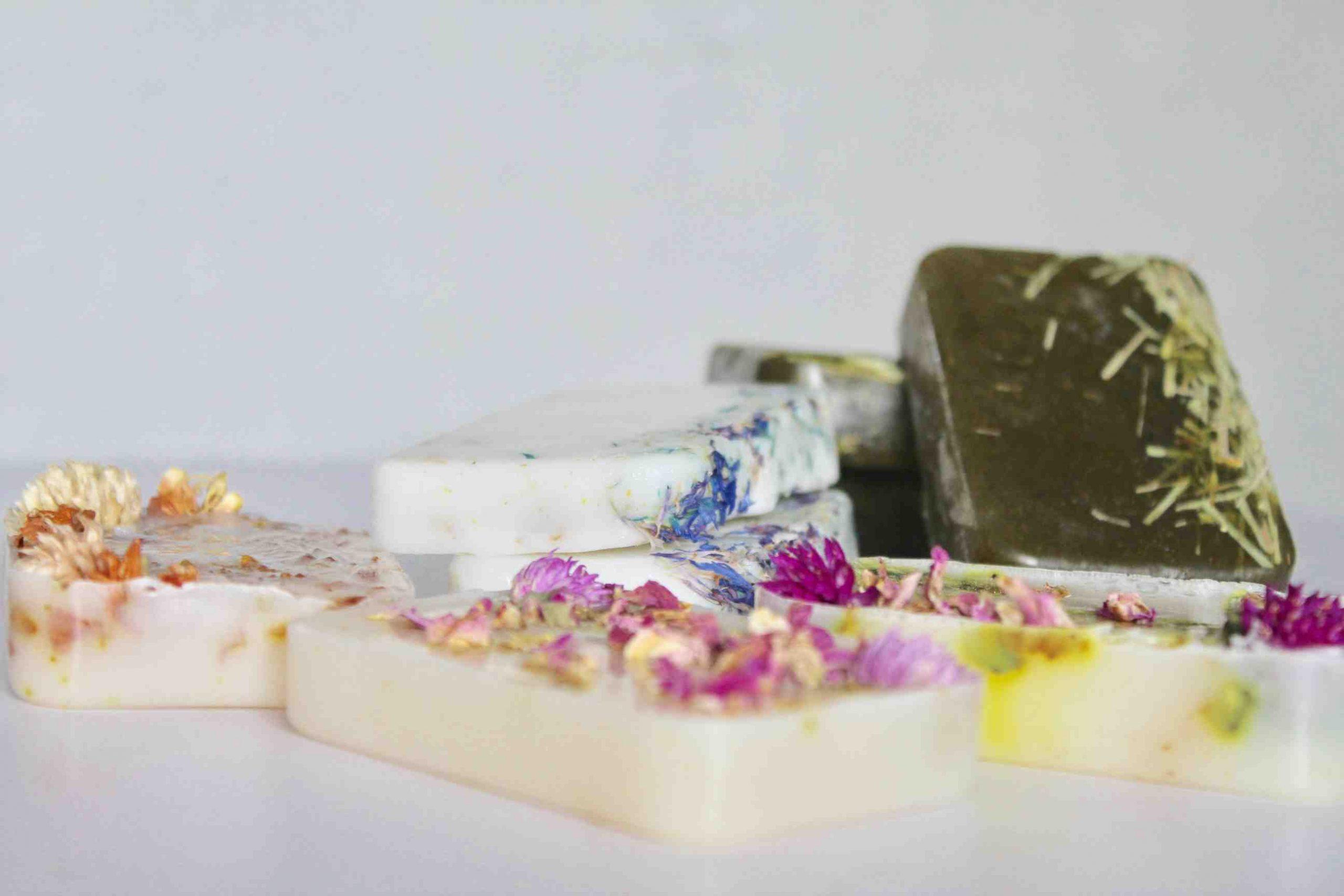
Rather than treating soap simply as a commodity, small-batch soap makers can focus on the combination of oils, butters, botanicals, fragrance, texture and skin feel.
Some potential advantages of handmade soap include:
1. Carefully Selected Ingredients
Handmade soap allows the formulation to focus on specific oils, botanical ingredients, butters and other components.
Depending on the recipe, ingredients may be selected for their cleansing, conditioning, moisturizing or sensory properties.
For example, glycerin can help the skin retain moisture, while plant oils and butters can contribute to the overall feel of a cleansing bar.
2. A More Thoughtful Bathing Experience
Soap is part of a daily ritual.
The aroma of botanicals, the texture of a bar, the feel of the lather and the natural appearance of ingredients can turn an ordinary shower into a more mindful experience.
For BloomyBliss, this connection between nature and everyday wellbeing is an important part of natural skincare.
3. Variety for Different Preferences
There is no single handmade soap that is perfect for everyone.
Different formulations can be created around different ingredients and preferences.
You may find soaps formulated with:
- Glycerin
- Goat milk
- Shea butter
- Calendula
- Chamomile
- Rose
- Jasmine
- Lemongrass
- Basil
- Neem
- Aloe vera
- Other botanical ingredients
This makes it possible to explore different textures, aromas and skin-feel preferences.
4. Transparency About Ingredients
One of the biggest advantages of buying from a thoughtful skincare maker is being able to understand what goes into the product.
Instead of choosing a soap based only on marketing language, look at:
- The complete ingredient list
- The type of oils and butters used
- Added fragrance or essential oils
- Botanical ingredients
- How the product is made
- Packaging
- Sourcing practices
The ingredient list matters more than the word “natural” on the label.For a broader range of natural bathing products, explore our Natural Bathing Bars.
Organic Handmade Soap vs Commercial Soap
The difference is not simply that one is “good” and the other is “bad.”
Commercial and handmade soaps can have very different formulations, manufacturing processes and ingredient choices.
The important question is:
What is actually in the soap, and is the formulation suitable for your skin?
Handmade soap may provide greater variety in oils, botanicals and formulation styles, while commercial cleansing products may be formulated for specific purposes such as long shelf life, consistency, fragrance or particular cleansing characteristics.
Rather than assuming that every handmade soap is automatically better, read the ingredients and understand the formulation.
What Ingredients Are Commonly Used in Handmade Soap?
Different ingredients contribute different characteristics to a soap.
Plant Oils
Oils such as coconut, olive, sunflower, castor and other vegetable oils may be used in soap formulations.
The combination and proportions of oils influence the hardness, cleansing ability, lather and conditioning characteristics of the finished bar.
Shea Butter
Shea butter is commonly used in skincare because of its rich, emollient texture.
In handmade soap, it can contribute to the overall conditioning feel of the bar.
Glycerin
Glycerin is a humectant that helps attract and retain moisture.
Many handmade soap formulations naturally contain glycerin as part of the soap-making process.
Glycerin-based soaps can also be formulated as gentle cleansing bars with a smooth, translucent or botanical appearance depending on the ingredients used.
Goat Milk
Goat milk is used in many traditional and modern skincare formulations.
Goat milk soaps are popular among people who enjoy a creamy cleansing experience and want a soap containing milk-based ingredients.
Flowers and Botanicals
Flowers and herbs can add both visual and sensory character to handmade soap.
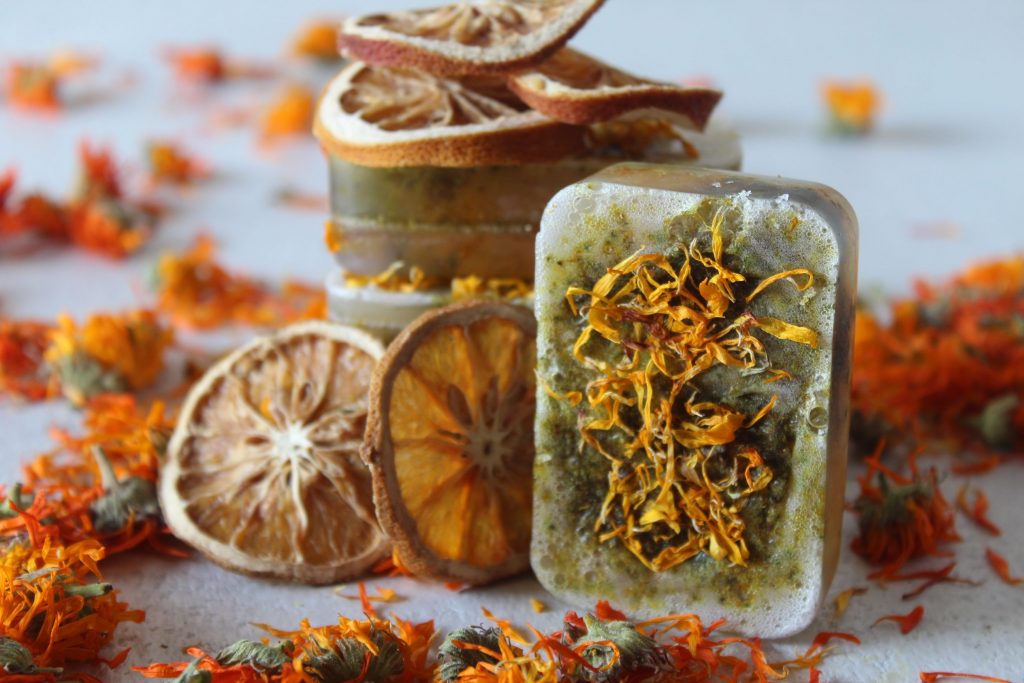
Depending on the formulation, ingredients may include calendula, chamomile, rose, jasmine, chrysanthemum, basil, lemongrass and other botanicals.
At BloomyBliss, flowers and botanicals are particularly meaningful because our relationship with plants begins with our connection to nature and our farm.
Are Organic Handmade Soaps Good for Sensitive Skin?
They can be a good option for some people, but no soap should be described as universally suitable for sensitive skin.
Sensitive skin can react to many different ingredients, including fragrance, essential oils and botanical extracts.
If your skin is sensitive:
- Choose simpler formulations where possible.
- Read the complete ingredient list.
- Avoid ingredients you already know trigger irritation.
- Patch test a new product when appropriate.
- Stop using a product if it causes persistent irritation.
- Speak with a dermatologist if you have an ongoing skin condition.
A natural ingredient is not automatically irritation-free.
Natural skincare should still be chosen thoughtfully.
Are Handmade Soaps Better for Skin?
There is no single answer because formulations differ.
A well-formulated handmade soap can provide an enjoyable cleansing experience and may contain oils, butters and botanical ingredients that suit your preferences.
However, “handmade” by itself does not guarantee that a soap will suit your skin.
When choosing a soap, consider:
- Your skin type and preferences
- The ingredient list
- Fragrance and essential oils
- The cleansing characteristics of the formulation
- How your skin feels after washing
If your skin feels consistently tight, uncomfortable or irritated after cleansing, the product may not be the right match for you.
Organic Soap vs Natural Soap: What’s the Difference?
The terms organic and natural are often used together, but they should not be treated as interchangeable.
Organic Soap
The word organic generally relates to how particular agricultural ingredients are grown and produced and may be subject to certification standards depending on the market and claim.
Natural Soap
“Natural” generally describes ingredients or formulations derived from natural sources, but the term itself can have different meanings depending on the product and market.
Handmade Soap
“Handmade” primarily describes the way a product is produced rather than automatically describing the origin of every ingredient.
Therefore, when choosing a soap, don’t rely on a single label.
Look at the formulation.
How to Choose the Right Organic Handmade Soap
Choosing the right soap doesn’t have to be complicated.
For a Simple Everyday Cleanse
Look for a formulation that provides a comfortable cleansing experience without leaving your skin feeling excessively dry or tight.
If You Prefer Glycerin-Based Soaps
Look for soaps formulated with glycerin and other ingredients that complement your preferred skin feel.
If You Prefer Richer Formulations
Goat milk or shea butter formulations may appeal to people who enjoy a creamy, conditioning bathing experience.
If You Love Botanical Skincare
Look for soaps featuring flowers, herbs or botanical oils that you personally enjoy.
If You Have Sensitive Skin
Keep the formulation simple and pay particular attention to fragrance, essential oils and other ingredients that may cause irritation for you.
How to Use Handmade Soap
Good soap care starts with how you use and store the bar.
Step 1: Wet Your Skin
Use lukewarm water rather than very hot water.
Step 2: Lather the Soap
Create a gentle lather between wet hands or with a suitable bathing accessory.
Step 3: Cleanse Gently
Massage the lather over the body without aggressive scrubbing.
Step 4: Rinse Thoroughly
Rinse away the soap with clean water.
Step 5: Store the Bar Properly
Allow the soap to dry between uses.
A soap dish with drainage or a well-ventilated soap holder can help prevent the bar from sitting in water and becoming unnecessarily soft.
How Long Does Handmade Soap Last?
The lifespan of a handmade soap bar depends on several factors:
- How frequently it is used
- How much water it receives
- How it is stored
- The formulation of the soap
- The size of the bar
A bar that remains constantly wet will generally disappear faster than one that is allowed to dry between uses.
Keeping your soap dry between uses is one of the simplest ways to make it last longer.
Are Organic Handmade Soaps Environmentally Friendly?
They can be a more thoughtful choice depending on how the ingredients are sourced, formulated, packaged and transported.
But it is important not to assume that every product labelled “organic” or “natural” is automatically sustainable.
Environmental impact can involve:
- Ingredient sourcing
- Farming practices
- Processing
- Packaging materials
- Transportation
- Product lifespan
- Waste and disposal
At BloomyBliss, we believe sustainability is about looking at the whole journey of a product, not simply putting the word “natural” on a label.
Why BloomyBliss Makes Natural Handmade Soaps
Our approach to skincare begins with our connection to nature.
BloomyBliss was built around the idea of bringing natural living closer to everyday life — from flowers and botanicals to skincare and other lifestyle products.
Our farm gives us a deeper appreciation for where botanical ingredients begin: with soil, sunlight, water, seasons and careful cultivation.
That perspective influences how we think about skincare.
We don’t believe natural skincare needs to be complicated.
We believe it should be:
Thoughtful.
Honest.
Nature-inspired.
Made with intention.
Our handmade soap collection includes different formulations featuring botanical and nourishing ingredients, allowing you to explore the type of cleansing experience that works best for you.
Explore BloomyBliss Handmade Soaps
If you are looking for natural and organic-inspired handmade soaps, explore the BloomyBliss collection of [Organic Luxury Handmade Soaps].
You can explore different formulations including botanical, floral, glycerin, goat milk and other handmade soap varieties.
Choose the ingredients that make sense for your skin — and make your everyday bathing ritual a little closer to nature.
Frequently Asked Questions
What is organic handmade soap?
Organic handmade soap is a handcrafted or small-batch soap made with selected ingredients, including organic ingredients where applicable. The exact formulation varies by product, so always check the ingredient list.
Is handmade soap better than regular soap?
Not necessarily for everyone. Handmade soaps can offer different formulations and ingredient combinations, but the best soap depends on your skin, preferences and the specific formulation.
Is organic soap good for everyday use?
Many people use organic or natural handmade soaps as part of their everyday bathing routine. Choose a formulation that feels comfortable on your skin and follow the product’s usage instructions.
Is glycerin soap good for dry skin?
Glycerin is a humectant that attracts moisture. Glycerin-containing soaps can provide a different skin feel from some conventional cleansing bars, but the complete formulation matters.
Are handmade soaps suitable for sensitive skin?
Some may be, but sensitive skin can react to fragrance, essential oils and botanical ingredients. Always check the ingredient list and choose according to your individual tolerance.
Are organic handmade soaps chemical-free?
The phrase “chemical-free” is misleading, because everything is made of chemicals, including water and naturally occurring ingredients.
A better question is: Which ingredients are used, and why?
Look for transparent ingredient lists and choose products based on the formulation rather than the “chemical-free” label.
Are handmade soaps cruelty-free?
Cruelty-free status depends on the brand’s ingredients, suppliers and testing practices. If cruelty-free matters to you, check the manufacturer’s specific policy rather than assuming that every handmade soap is cruelty-free.
Can children use handmade soap?
Children’s skin can be more sensitive than adult skin. Choose products specifically formulated for children when appropriate, and check the ingredients carefully. A handmade or natural label alone does not guarantee suitability for children.
How should handmade soap be stored?
Keep the bar away from standing water and allow it to dry between uses. A draining soap dish or ventilated holder can help extend the life of the bar.
Where can I buy BloomyBliss handmade soaps?
You can explore the BloomyBliss collection of organic and natural handmade soaps and choose a formulation based on your preferred ingredients and skincare needs.
Your skin doesn’t need a complicated routine to feel cared for.
Sometimes, it starts with something as simple as choosing a thoughtfully formulated soap.
From plants to ingredients, from ingredients to formulation, and from formulation to your daily ritual — every step matters.
At BloomyBliss, we are building a lifestyle closer to nature, one product at a time.
BloomyBliss — For an organic lifestyle.
Everything is very open with a precise clarification of the challenges. It was really informative. Your website is useful. Thanks for sharing!
Thanks for your valuable feedback.
Incredible is a unique productivity tool that will assist you obtain more carried out in much less time.
I am so pleased with all that you have accomplished. You make others feel approved as well as appreciated.
I am so happy with all that you have actually completed. You make others feel approved and also valued.
Since of its incredible ability to change, remarkable can work wonders to your life all over.