Flowers have always been one of the simplest ways to bring nature into our homes.
But as more people become conscious of what they buy, a natural question is becoming increasingly important:
Are dried flowers sustainable?
The honest answer is:
Dried flowers can be a more sustainable choice for floral decor, but not every dried flower product is equally sustainable.
It depends on much more than whether the flower originally came from nature.
We need to look at the complete journey of the flower:
Growing → harvesting → drying → processing → colouring → packaging → transportation → use → reuse → disposal
At BloomyBliss, we believe this entire journey matters.
A flower may be natural at the beginning, but the materials and processes used afterward can change its environmental impact.
That is why we believe sustainability should be approached with honesty—not simply used as a marketing label.
What Are Sustainable Dried Flowers?
Sustainable dried flowers are flowers and botanical materials that are produced, processed, packaged, used, and eventually disposed of with consideration for their environmental impact.
There isn’t one single process that automatically makes a dried flower “sustainable.”
Instead, sustainability involves many choices.
For example:
- How the flower was grown
- How much water and other resources were used
- How it was harvested
- How it was dried
- Whether it was chemically treated
- Whether synthetic colours or coatings were added
- How it was packaged
- How far it travelled
- How long it can be used
- Whether it can be reused
- What happens when it reaches the end of its life
This broader perspective is important when choosing dried flowers.
Why Can Dried Flowers Be a Sustainable Choice?
Dried flowers have several characteristics that can make them an appealing option for more conscious home decor and gifting.
1. Dried Flowers Can Last Much Longer Than Fresh Flowers
Fresh flowers have a naturally limited decorative life.
Dried flowers, when properly prepared and cared for, can remain beautiful for months and often much longer.
Instead of replacing a fresh bouquet every few days or weeks, a dried arrangement can become a long-term part of your home.
This longevity is one of the biggest reasons people choose dried flowers.
The longer you use something, the more value you can get from the material and resources that went into creating it.
2. Dried Flowers Don’t Need Water After Drying
Once flowers have been properly dried, they don’t need regular watering.
You don’t need to:
- Change vase water
- Add flower food
- Refill water
- Trim stems every few days
- Replace the arrangement frequently
Simply place your dried flowers in a suitable location and enjoy them.
Of course, the flowers still required resources while they were growing. So we shouldn’t claim that dried flowers have no water footprint.
The important distinction is that once dried, they don’t require ongoing water to remain decorative.
3. They Are Made From Real Botanical Materials
One of the most beautiful things about dried flowers is that they begin as real flowers and plants.
You can see their:
- Natural textures
- Petals
- Stems
- Seed heads
- Grasses
- Botanical structures
- Natural variations
Unlike artificial flowers that are manufactured to imitate nature, dried flowers allow you to experience the actual form of a plant.
But this comes with an important reminder:
Natural does not automatically mean sustainable.
The way a natural material is grown and processed matters.
4. Dried Flowers Can Become Long-Term Home Decor
A dried bouquet isn’t necessarily something you buy today and throw away next week.
It can become part of your home for a long time.
You can use dried flowers for:
- Living room decoration
- Bedroom decor
- Dining table arrangements
- Office decoration
- Entryway styling
- Wedding decor
- Seasonal decoration
- Wreaths
- Creative projects
- Gifting
This long-term use can make dried flowers an attractive alternative for people who want to reduce frequent replacement of decorative products.
5. Dried Flowers Can Be Reused
A dried bouquet doesn’t necessarily have to have only one purpose.
When a bouquet starts to age, individual flowers can sometimes be separated and used for:
- Handmade cards
- Scrapbooking
- Floral art
- Wreaths
- Crafts
- Resin projects
- Gift wrapping
- Decorative projects
Repurposing extends the useful life of the material.
And sometimes, sustainability is simply about asking:
“Can I use this for something else before I throw it away?”
But Are All Dried Flowers Sustainable?
No.
This is an important distinction.
The fact that a flower is dried does not automatically make it environmentally friendly.
The sustainability of a dried flower depends on how it was:
grown + harvested + dried + processed + treated + packaged + transported + used + discarded
And one area that deserves particular attention is chemical treatment and colouring.
Natural Doesn’t Always Mean Sustainable
Today, dried flowers are sometimes processed to create brighter, more consistent, or unusual colours.
Some products may be:
- Dyed
- Bleached
- Chemically treated
- Coated
- Preserved
- Altered to achieve a particular appearance
These treatments can create visually striking flowers.
But they also make the sustainability question more complicated.
A flower may begin as a natural botanical material, but if significant synthetic treatments are added during processing, we should ask:
What was used to create the final product?
And more importantly:
What happens to those added materials when the flower reaches the end of its life?
Why We Don’t Consider Heavily Chemically Treated Flowers Sustainable
At BloomyBliss, we believe that sustainability should be considered across the whole lifecycle of a product.
That means we don’t believe a dried flower should automatically be called sustainable simply because it started as a plant.
If a flower is heavily processed, chemically coloured, coated, or treated, its environmental impact needs to be considered differently from a naturally dried botanical.
The concern isn’t only the finished flower sitting in a vase.
It is the entire process:
Growing
↓
Harvesting
↓
Drying
↓
Chemical processing / colouring
↓
Packaging
↓
Transportation
↓
Use
↓
Disposal
Every stage matters.
If additional chemicals or synthetic materials are introduced during processing, they become part of the product’s environmental story.
That is why BloomyBliss prefers to work toward a more natural approach wherever possible.
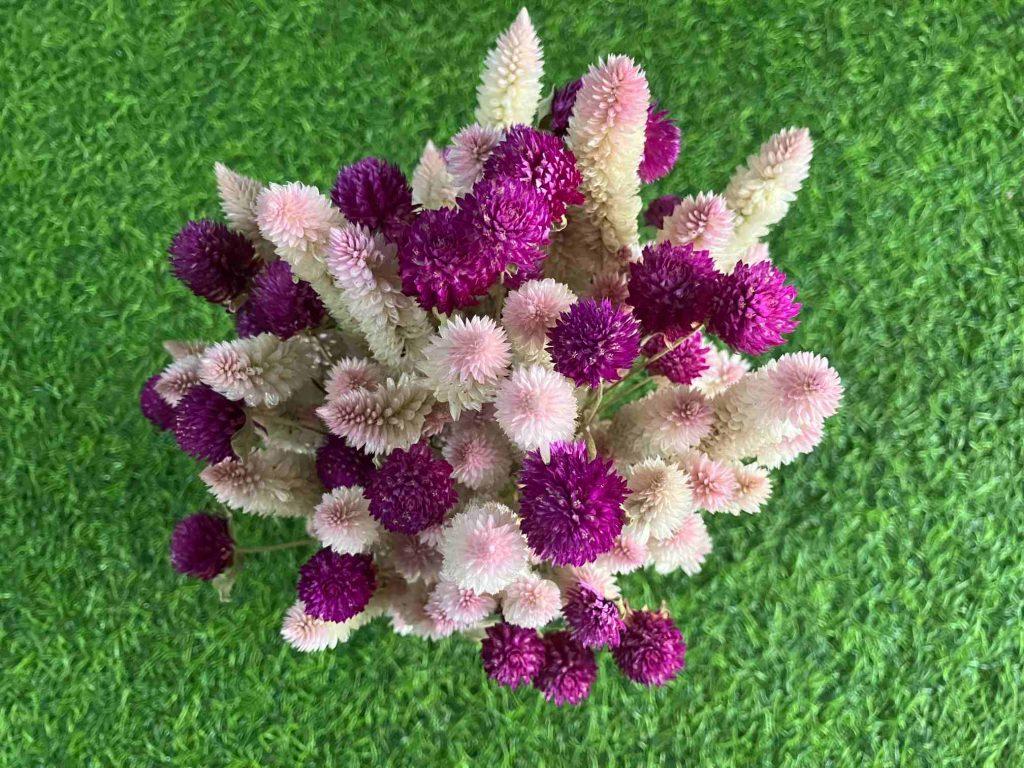
We Prefer Nature’s Colours Over Artificial Perfection
Nature doesn’t produce every flower in exactly the same shade.
One flower may be slightly lighter.
Another may be darker.
Some flowers may have subtle variations.
Some petals may naturally change colour as they dry.
And sometimes flowers may have small imperfections.
We don’t see those differences as flaws.
We see them as part of nature.
At BloomyBliss, we prefer the character of naturally dried flowers rather than changing nature simply to achieve perfect uniformity.
Because we believe:
Nature doesn’t need to look artificial to be beautiful.
This philosophy is especially important to us because BloomyBliss is not only about selling flowers.
It is about encouraging people to reconnect with nature, natural living, and more conscious choices.
Are Dried Flowers More Sustainable Than Fresh Flowers?
There isn’t one universal answer.
Fresh and dried flowers have different environmental considerations.
Fresh flowers may involve:
- Water during cultivation
- Refrigerated storage
- Frequent replacement
- Packaging
- Transportation
- Flower waste
Dried flowers may involve:
- Resources used during cultivation
- Drying processes
- Processing
- Packaging
- Transportation
- Treatments or colouring
Therefore, it would be misleading to say:
“All dried flowers are better for the environment than all fresh flowers.”
The better question is:
“How was this particular flower produced and how long will I use it?”
A responsibly produced dried bouquet that remains in someone’s home for a long time can be a very different proposition from a heavily processed product that contains unnecessary synthetic treatments and excessive packaging.
Are Dried Flowers Better Than Artificial Flowers?
This depends on what you value.
Artificial flowers are commonly manufactured from synthetic materials such as plastics, polyester, foam, and other materials.
Dried flowers begin as actual botanical materials.
For someone who wants to reduce the use of synthetic decorative products and bring real natural materials into their home, dried flowers can be an attractive choice.
However, the same principle applies:
A natural material isn’t automatically sustainable, and a synthetic material isn’t the only factor that determines environmental impact.
Look at the whole lifecycle.
Are Dried Flowers Biodegradable?
Many untreated dried flowers consist primarily of natural plant material and can eventually break down under appropriate conditions.
However, a complete floral arrangement may contain other materials.
For example:
- Florist wire
- Plastic
- Synthetic ribbons
- Foam
- Adhesives
- Coatings
- Artificial decorative elements
These materials may not break down in the same way as natural plant material.
Therefore, if you’re thinking about the end of life of your dried flowers, separate the different components whenever possible.
Natural flowers should not automatically be treated as equivalent to a completely biodegradable product.
What About Chemically Coloured Dried Flowers at the End of Their Life?
This is one reason we believe consumers should ask more questions about processed dried flowers.
If a natural flower has been significantly altered through synthetic dyes, coatings, bleaching, preservatives, or other treatments, those materials become part of what eventually needs to be managed when the product is discarded.
We should therefore avoid making blanket claims that all coloured dried flowers are “eco-friendly.”
Instead, consider:
What was added?
How was it processed?
Is the treatment known?
What materials are present in the final product?
How should it be disposed of?
This is a more responsible way of thinking about sustainability.
How to Make Your Dried Flowers More Sustainable
Sustainability isn’t only the responsibility of the person growing or selling the flowers.
Customers can also make thoughtful choices.
Choose Flowers You Will Keep
Instead of buying decor simply because it is trending, choose something you genuinely love.
The longer you enjoy it, the more useful the product becomes.
Take Care of Your Dried Flowers
Proper care can extend their decorative life.
Keep them:
- Away from excessive moisture
- Away from direct sunlight
- In a suitable indoor environment
- Away from unnecessary handling
A bouquet that lasts longer doesn’t need to be replaced as quickly.
Look Beyond the Word “Eco-Friendly”
Don’t make purchasing decisions based only on labels.
Ask questions about:
- Materials
- Sourcing
- Processing
- Colouring
- Packaging
- Longevity
- Disposal
Understanding the story behind a product helps you make better choices.
Prefer Minimal and Thoughtful Packaging
Packaging is another part of sustainability.
Where practical, choose products that avoid unnecessary layers of packaging and excessive plastic.
Reuse Before Disposal
Before throwing away an old bouquet, see whether individual flowers can be used for another purpose.
A flower that has finished its life as a centerpiece might still have another life as:
art → craft → gift wrapping → wreath → creative project
What Makes a More Responsible Dried Flower?
There isn’t a single checklist that guarantees sustainability.
But a more responsible dried flower product considers several things together.
Responsible growing
Consider where and how the flowers are grown.
Thoughtful harvesting
Natural resources and the plant material should be treated responsibly.
Appropriate drying
The drying process should be considered as part of the product’s overall impact.
Minimal unnecessary treatment
Avoiding unnecessary chemical colouring, coatings, or treatments can help maintain a more natural product.
Thoughtful packaging
Use packaging carefully and avoid unnecessary materials where possible.
Considered transportation
The distance a product travels is another part of its environmental footprint.
Long-term use
The longer the customer can enjoy the product, the better.
Reuse
Find additional uses for flowers whenever possible.
Responsible disposal
Separate natural botanical material from synthetic components where appropriate
BloomyBliss: Our Approach to Sustainable Dried Flowers
At BloomyBliss, we don’t want sustainability to be just another word on a product page.
We want it to influence how we think about our products.
Our relationship with flowers starts with nature.
From the farm and the growing process to harvesting, drying, creating, packaging, and finally reaching someone’s home—we believe every stage matters.
We also believe customers deserve honesty.
We don’t want to tell you:
“It’s a flower, therefore it’s automatically eco-friendly.”
That’s too simple.
Instead, we want to encourage a better question:
“How was this flower treated throughout its journey?”
That question leads to more conscious consumption.
We Don’t Want to Make Nature Perfect
Modern processing can make flowers brighter, more uniform, and more visually predictable.
But natural beauty isn’t always uniform.
A naturally dried flower may have:
- A softer colour
- A slightly different shape
- Natural variation
- Small imperfections
- Seasonal differences
And that’s okay.
In fact, that’s what makes it special.
We don’t want to hide nature behind unnecessary processing.
We want to preserve the feeling that you’re bringing something from the natural world into your home.
Sustainability Is About More Than a Product
We believe sustainable living isn’t about finding one perfect product.
It is about developing a different way of thinking.
Instead of:
Buy → use → throw away
we can think:
Choose → care → keep → reuse → responsibly dispose
That small shift can change how we interact with everyday products.
Dried flowers are simply one example.
Can Dried Flowers Be Part of a Sustainable Lifestyle?
Yes.
When thoughtfully sourced and processed, dried flowers can fit beautifully into a more conscious lifestyle.
They can help us appreciate:
Longevity over disposability.
Natural variation over artificial perfection.
Reuse over unnecessary replacement.
Thoughtful purchasing over impulse consumption.
And most importantly:
Connection with nature over imitation of nature.
FAQ About Sustainable Dried Flowers
Are dried flowers sustainable?
Dried flowers can be a more sustainable choice for floral decor because they can last much longer than fresh flowers and don’t require water after drying. However, sustainability depends on how the flowers are grown, processed, treated, packaged, transported, used, and disposed of.
Are dried flowers eco-friendly?
Some dried flowers can be considered a more environmentally conscious decorative option, particularly when they are responsibly sourced, minimally treated, long-lasting, and thoughtfully packaged. However, “eco-friendly” should not be assumed simply because a flower is natural.
Are naturally dried flowers better than chemically coloured dried flowers?
If your priority is maintaining a more natural product, naturally coloured and minimally processed dried flowers can be preferable to heavily dyed, bleached, coated, or chemically treated flowers. The specific environmental impact depends on the materials and processes used.
Are coloured dried flowers sustainable?
It depends on how they are coloured. Different dyes, treatments, coatings, and processing methods can have different environmental impacts. It is therefore better to understand what treatment has been used before calling a coloured dried flower sustainable.
Are dried flowers better for the environment than fresh flowers?
Not necessarily in every situation. Both fresh and dried flowers have environmental impacts at different stages of their lifecycle. Dried flowers have the advantage of potentially lasting much longer and requiring no watering once dried.
Are dried flowers better than artificial flowers?
Dried flowers are made from real botanical materials, while artificial flowers are generally made using synthetic materials. If you prefer natural decorative materials, dried flowers may be a better fit, but the environmental impact still depends on processing, packaging, transportation, and disposal.
Can dried flowers be composted?
Untreated natural plant material may be suitable for composting under appropriate conditions, but complete arrangements can contain wire, ribbons, adhesives, coatings, or synthetic materials. These should be separated and handled according to local waste guidelines.
Can dried flowers be reused?
Yes. Older dried flowers can sometimes be reused for crafts, floral art, wreaths, gift wrapping, resin projects, cards, and other creative applications.
How can I make dried flowers last longer?
Keep them dry, protect them from excessive sunlight, avoid unnecessary handling, and clean them gently. Proper care can help extend their decorative life.
What should I look for when buying sustainable dried flowers?
Look beyond marketing claims. Consider the flower’s sourcing, growing practices, drying method, chemical treatments, colouring, packaging, transportation, expected lifespan, and disposal options.
Our Philosophy at BloomyBliss
We believe nature doesn’t need to be overprocessed to be beautiful.
We believe products should have a story.
We believe customers deserve to know what they’re buying.
And we believe sustainability should be considered from the beginning of a product’s journey to the very end.
For us, dried flowers aren’t simply about decoration.
They are about bringing nature into everyday life and learning to appreciate it differently.
Because when we truly value something from nature, we don’t just ask:
“How beautiful is it?”
We also ask:
“How did it get here?”
“How long can I enjoy it?”
“Can I use it again?”
“And what happens when I’m finished with it?”
Those questions are where conscious consumption begins.
Nature doesn’t need to be perfect to be beautiful.
And sustainability doesn’t need to be a marketing claim to be meaningful.
At BloomyBliss, we choose to let nature speak for itself.