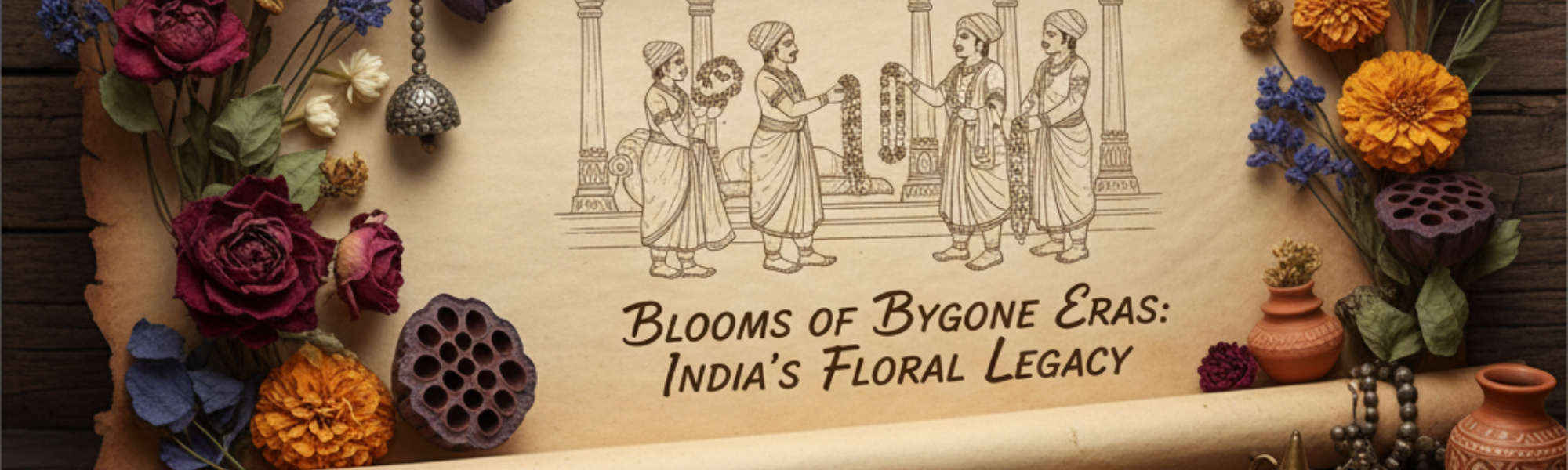
Dried flower art may feel like a modern aesthetic trend today, but India has been preserving flowers for spiritual, medicinal, and decorative purposes for centuries. From ancient Ayurvedic traditions to temple rituals and royal crafts, the art of drying and preserving blooms has evolved beautifully. What began as a healing and cultural practice eventually transformed into a refined art form during the Mughal era, and later, into a scientific botanical study during colonial times.
In this blog, we explore how dried flower art grew across Indian history and why it continues to inspire artists, collectors, and décor lovers today, including us at BloomyBliss.
Ancient India: Where Flower Preservation First Began
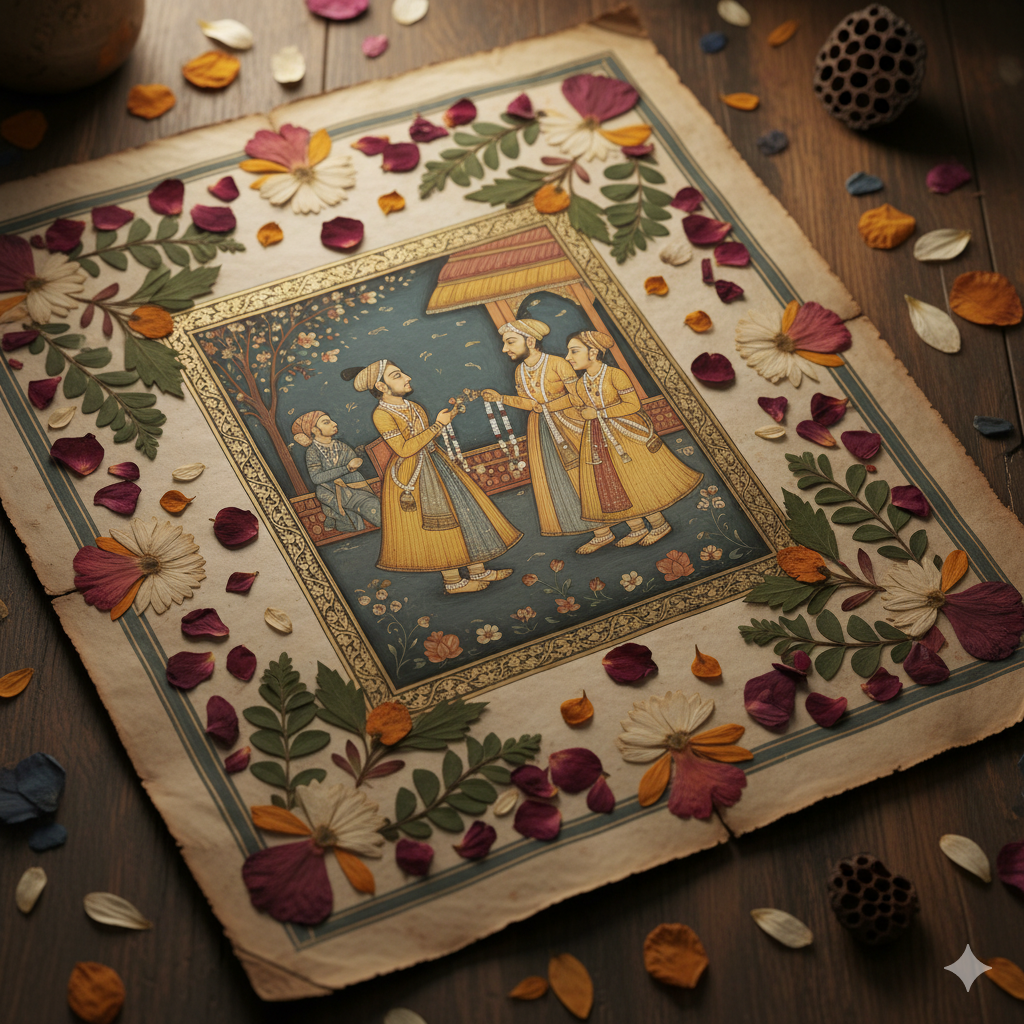
In the earliest periods of Indian civilization, flowers held deep spiritual, medicinal, and symbolic value. They were not admired only for their beauty, people also learned how to preserve them for long-term use. In temples, flowers were dried to prepare sacred powders, incense, and offerings.
Ancient Ayurvedic texts describe drying petals in sunlight to retain their healing properties. Flowers like rose, jasmine, lotus, marigold, and hibiscus were commonly dried to prepare herbal medicines, oils, and aromatic blends.
Dried petals were also used in natural cosmetics, perfumery, and early incense-making. This marks the earliest foundation of dried flower usage in India, showing how strongly nature was integrated into daily life.
Ayurveda and Dried Flowers
Ayurveda used sun-dried petals to make medicinal pastes, skin-healing oils, and herbal powders. Drying protected the plant’s essence, making it easy to store and use throughout the year. This practice later influenced both temple crafts and household traditions.
The Era of Kings: Mughal Influence on Floral Art
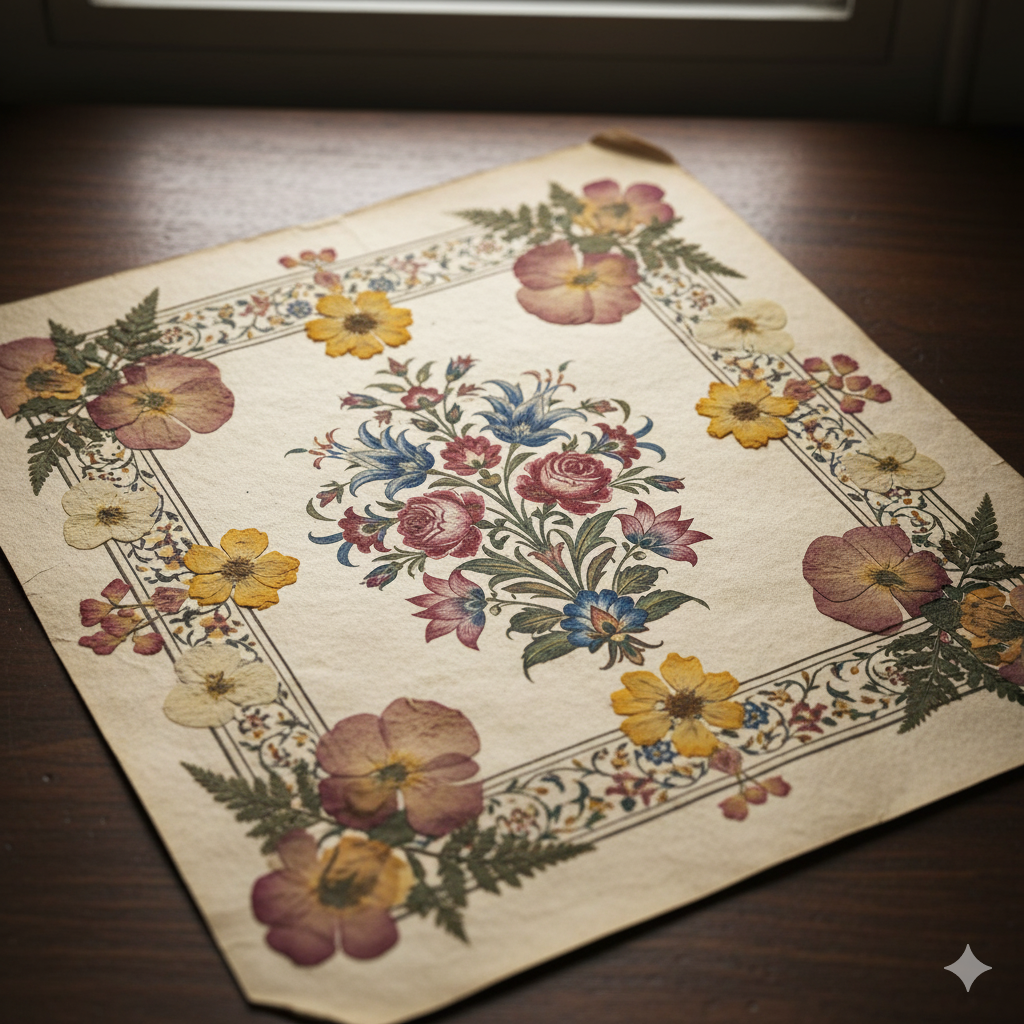
The Mughal era elevated flower appreciation to an entirely new artistic level. Mughal artisans and miniature painters studied flowers in detail, often using dried pigments made from crushed petals for creating delicate paintings. Many royal journals even contained pressed flowers sealed between pages as keepsakes.
Floral designs became a symbol of luxury seen on walls, carpets, palaces, textiles, perfumes, and manuscripts. Roses, lotus, tuberose, narcissus, and marigolds were among the most cherished blooms.
The royal courts encouraged botanical documentation and preservation, refining flower drying from a domestic practice into a sophisticated craft associated with beauty, poetry, and nature.
Fun Fact: Emperor Jahangir personally documented hundreds of Indian flowers and encouraged artists to preserve and illustrate them.
Temple Traditions & Folk Art: The Cultural Expansion
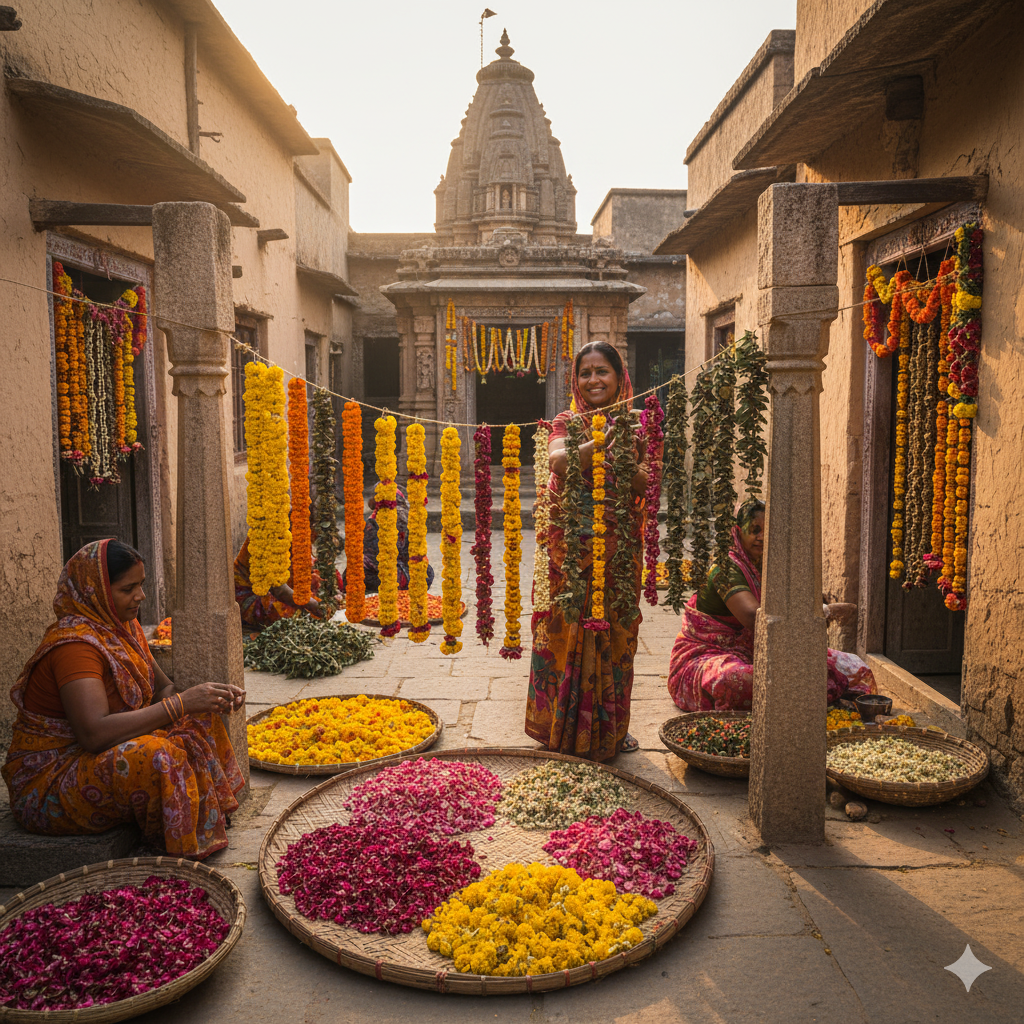
Beyond palaces, dried flower art flourished in India’s villages and temples. Marigold, jasmine, lotus, and hibiscus were dried to create long-lasting garlands for festivals and rituals. Many regions, especially Tamil Nadu, Rajasthan, Gujarat, and Odisha, perfected sun-drying techniques passed down through generations.
Dried petals were used in torans (door hangings), rangolis, seasonal decorations, bookmarks, diaries, festive decor, and even homemade natural colors. Rural artisans also used dried blooms to prepare natural dyes, herbal colours, and festive decor items. Bougainvillea and lotus petals were especially popular for their vibrant shades. Over time, this simple art of preserving flowers evolved into a meaningful cultural practice one that blended devotion, craftsmanship, and nature together in the most beautiful way.
Regional Crafts
- Rajasthan: Pressed flower greeting cards and handmade diaries.
- Tamil Nadu: Traditional strings of dried jasmine for homes and temples.
- Bengal: Botanical illustrations in manuscripts with dried flora references.
- Himachal Pradesh: Natural dyes created using dried wildflowers.
Colonial India: The Rise of Botanical Pressing
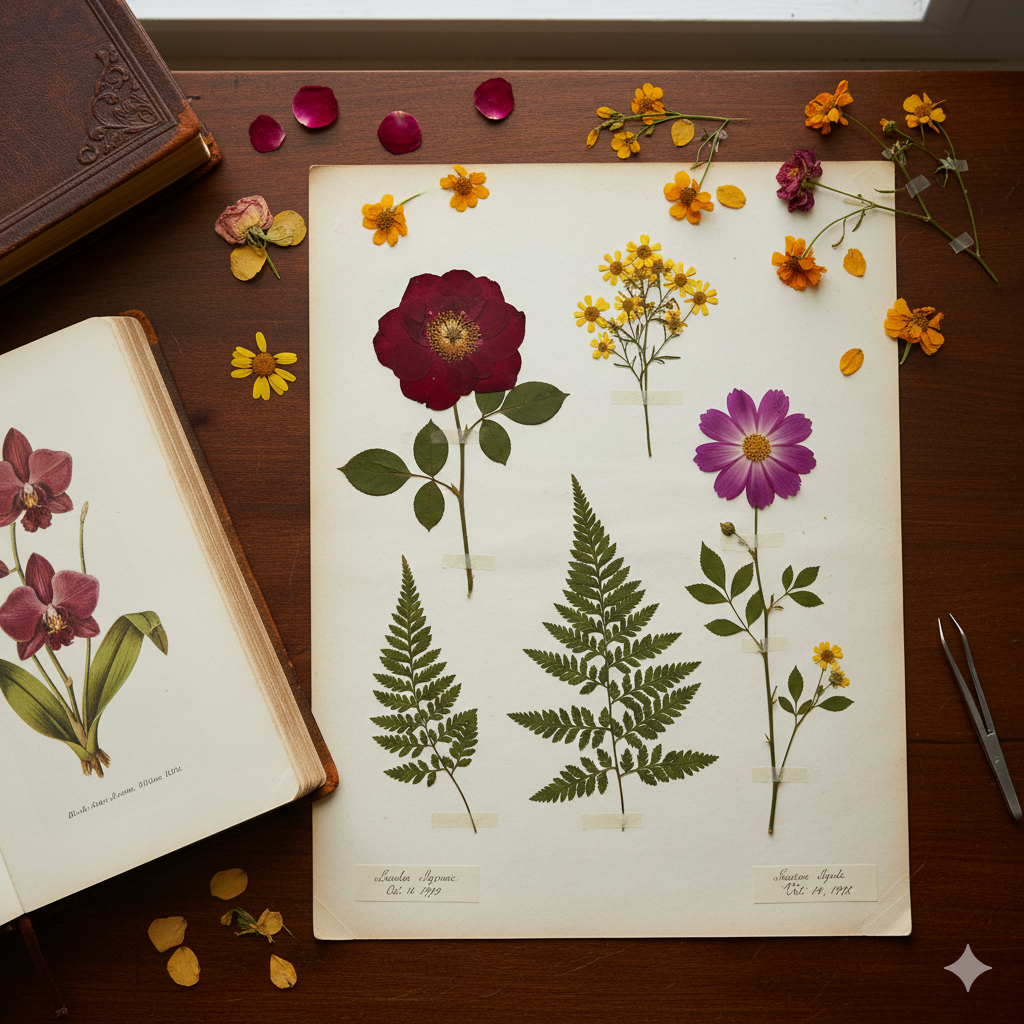
During the colonial era, the practice of preserving flowers took on a more scientific purpose. British botanists introduced structured flower pressing, which helped catalog India’s rich biodiversity. Herbariums became a respected discipline, and Indian collectors began preserving local species for study.
Pressed flower art quickly gained popularity among students, travelers, writers, and naturalists. Many kept pressed flowers inside journals as memories of places visited, seasons experienced, and gardens admired.
This era marked a shift from cultural or spiritual preservation to scientific and artistic documentation, creating a legacy that continues in botanical museums today.
Did You Know?
India’s oldest pressed flowers over 200 years old are still preserved in colonial herbarium collections.
Modern India: Dried Flowers as Home Decor & Lifestyle Art
In the last decade, dried flower art has made a beautiful comeback. With the rise of sustainable living, minimalistic aesthetics, and mindful decor, dried flowers are now cherished for their natural beauty and long life.
Modern homes, cafés, studios, and gifting trends embrace dried flowers for their earthy charm. Platforms like Instagram and Pinterest have popularized pressed flower frames, rustic bouquets, handcrafted incense, potpourri jars, and wax sachets.
Brands like BloomyBliss have brought contemporary design into this traditional craft using chemical-free, handpicked, naturally dried blooms. Today, people prefer dried flowers for their durability, elegance, eco-friendliness, and ability to blend beautifully with modern decor styles.
Trends
- Rustic bouquets for minimalist homes
- Pressed flower wall art
- Wax sachets for fragrance
- Dried flower incense blends
- Eco-friendly gifting hampers
Why Dried Flower Art Still Matters Today
Dried flower art continues to be loved because it is timeless, sustainable, and soulful. Unlike fresh flowers that fade quickly, dried blooms last for months or even years. They require no chemicals, no maintenance, and no waste.
They connect us to nature, bring calmness into our homes, and remind us of India’s artistic and cultural heritage. Dried flowers gracefully bridge the gap between ancient traditions and modern minimalist décor, making them perfect for conscious, slow living.
The story of dried flower art in India is not just about decoration it is a journey of culture, medicine, craftsmanship, and sustainability. From ancient Ayurveda to Mughal artistry, temple traditions to botanical science, the tradition continues to evolve beautifully.
At BloomyBliss, we’re proud to carry forward this heritage with natural, handmade dried flower art that preserves the beauty of nature in its purest form.