
Chamomile is one of the most recognised flowers in traditional herbal and beauty practices. Its small, daisy-like flowers have been used for generations in teas, botanical preparations, personal care, and natural skincare.
Today, chamomile can be found in a variety of skincare products, including facial oils, creams, masks, cleansers, handmade soaps, and botanical blends. It is particularly appreciated for its soothing botanical character and naturally occurring plant compounds.
But “chamomile” can mean different things in skincare. A product may contain chamomile flowers, powder, extract, infused oil, or essential oil, and these ingredients are not interchangeable.
In this guide, we’ll explore the benefits of chamomile for skin, how different chamomile ingredients are used, whether chamomile may suit sensitive-feeling skin, and how to choose chamomile skincare thoughtfully.
What Is Chamomile?
Chamomile refers to several daisy-like flowering plants from the Asteraceae family. Two commonly recognised varieties used in herbal and cosmetic preparations are German chamomile (Matricaria chamomilla) and Roman chamomile (Chamaemelum nobile).
The flowers contain naturally occurring botanical compounds, including flavonoids and other plant constituents that have been studied for their antioxidant and soothing properties.
Chamomile is used in different forms depending on the intended product:
- Dried flowers
- Flower powder
- Botanical extracts
- Infused oils
- Essential oils
- Tea or water-based preparations
The final properties and skin feel depend on the form used, its concentration, and the complete formulation.
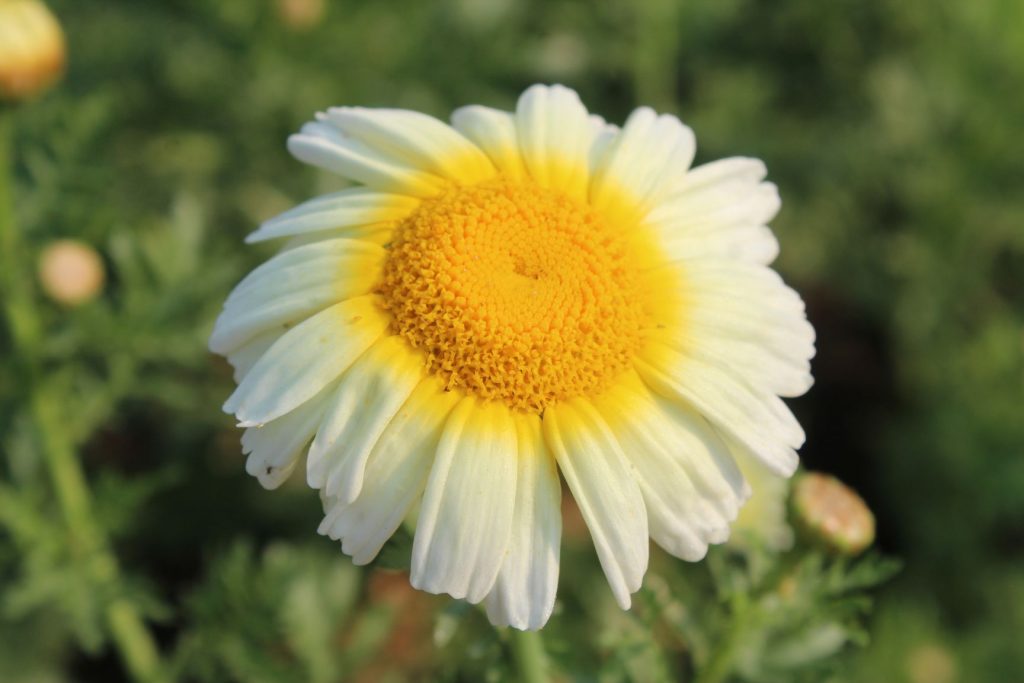
Chamomile Benefits for Skin
1. Provides Soothing Botanical Care
Chamomile is traditionally valued for its soothing character, which is one reason it appears in many personal-care formulations.
A well-formulated chamomile skincare product can be a pleasant choice when you want a simple, calming botanical element in your routine.
The experience depends on the complete formula rather than chamomile alone.
2. Contains Antioxidant Plant Compounds
Chamomile contains naturally occurring compounds that have antioxidant properties.
Antioxidants are commonly used in skincare because they help support the skin against everyday environmental stress. However, the effect of a skincare product depends on the type and concentration of the chamomile ingredient and how the product is formulated.
This makes chamomile an interesting botanical ingredient for everyday skincare focused on maintaining healthy-looking skin.
3. Helps Support Comfortable-Looking Skin
Chamomile is often chosen for formulations intended to provide a gentle and comfortable skincare experience.
Depending on the product, chamomile may help leave the skin feeling fresh, soft, and comfortable after use.
For people who prefer botanical skincare, chamomile can be a simple addition to an everyday cleansing or self-care ritual.
4. A Popular Botanical for Sensitive-Feeling Skin
Chamomile is frequently included in skincare designed for delicate or sensitive-feeling skin.
However, this does not mean chamomile is automatically suitable for everyone with sensitive skin.
Fragrance, essential oils, preservatives, botanical extracts, and other ingredients in the formulation can also affect how a product feels on your skin.
If your skin is sensitive, always check the complete ingredient list and patch test a new product before regular use.
5. Adds Botanical Value to Everyday Skincare
Chamomile works across many types of personal-care products, including:
- Facial oils
- Handmade soaps
- Face packs
- Cleansers
- Creams
- Lotions
- Botanical masks
- Bath products
Its versatility makes it a useful botanical ingredient for people who prefer nature-inspired skincare.
Chamomile for Different Skin Types
There is no single botanical that is perfect for every skin type. Your individual skin and the complete product formulation matter.
Chamomile for Dry-Feeling Skin
Chamomile can be included in products designed for dry-feeling skin, especially when combined with moisturising and skin-conditioning ingredients such as plant oils, butters, or glycerin.
Chamomile itself should not be considered a moisturiser. The overall formulation determines how nourishing or moisturising a product feels.
Chamomile for Oily-Feeling Skin
Chamomile can also be used in lightweight skincare formulations for oily-feeling skin.
If you have oily skin, look at the complete formulation and choose products with textures that feel comfortable rather than relying on chamomile alone.
Chamomile for Sensitive-Feeling Skin
Chamomile is commonly associated with gentle skincare, but natural ingredients can still cause reactions in some people.
If you have sensitive skin, introduce new products carefully and perform a patch test first.
Chamomile Oil for Skin
The term “chamomile oil” can refer to different types of products, so it is important to understand what you are buying.
Chamomile Essential Oil
Chamomile essential oil is a concentrated aromatic ingredient obtained from chamomile plant material.
Essential oils should generally not be applied directly to the skin undiluted. They are normally used in appropriately formulated or diluted products.
Chamomile-Infused Oil
A chamomile-infused oil is different from chamomile essential oil.
It is generally made by infusing chamomile plant material into a carrier oil. The final properties depend on the carrier oil, plant material, extraction method, and infusion process.
Chamomile Extract
Chamomile extract is prepared using a particular extraction method and may be incorporated into creams, serums, masks, cleansers, or other cosmetic formulations.
These three forms should not be treated as the same ingredient.
Chamomile in Handmade Soap
Chamomile can be a beautiful botanical addition to handmade soap.
When used in a carefully formulated soap, chamomile can contribute to a gentle, flower-inspired cleansing experience while adding a natural botanical story to the product.
A chamomile handmade soap may:
- Provide everyday cleansing
- Add botanical character
- Leave skin feeling fresh and comfortable
- Create a simple nature-inspired bathing ritual
- Complement other skin-conditioning ingredients in the formula
Because soap is a rinse-off product, its experience is different from a leave-on chamomile oil, serum, or cream.
Chamomile soap should not be presented as a treatment for acne, eczema, psoriasis, rosacea, wounds, or other medical conditions.
Can Chamomile Help with Acne?
Chamomile is sometimes promoted online as an acne treatment because certain chamomile compounds have been studied for their biological properties.
However, that does not mean chamomile skincare can cure or prevent acne.
If you have occasional blemishes, a gentle cleansing routine may be helpful for maintaining comfortable-looking skin. For persistent, painful, or severe acne, it is better to seek advice from a qualified dermatologist.
Can Chamomile Help with Redness?
Chamomile is traditionally associated with soothing skincare, and certain chamomile compounds have been studied for their biological activity.
However, redness can have many different causes. A cosmetic product containing chamomile should not be considered a treatment for persistent redness or an underlying skin condition.
If redness is frequent, painful, or persistent, professional advice is appropriate.
Chamomile and Dark Circles
Chamomile tea bags and chamomile-based products are sometimes used as home remedies for tired-looking eyes.
While a cool compress may temporarily provide a refreshing feeling, there is no reason to promise that chamomile will permanently remove dark circles.
Dark circles can be influenced by genetics, pigmentation, allergies, sleep, age, and other factors.
For the delicate eye area, use products specifically formulated for that area and follow their instructions.
Chamomile and Sun-Exposed Skin
Chamomile is often associated with soothing skincare after everyday environmental exposure.
However, chamomile should not be considered a treatment for sunburn or a replacement for sunscreen.
If your skin is exposed to the sun, daily broad-spectrum sunscreen and sensible sun protection remain important.
For significant sunburn, blistering, or severe discomfort, seek appropriate medical care.
Chamomile Flower, Powder, Extract or Oil: Which Is Better?
There is no universal “best” form. It depends on the product and what you want from your skincare routine.
Chamomile Flowers
Dried flowers can be used in botanical preparations, bath products, or handmade skincare.
Chamomile Powder
Powdered flowers may be used in face packs and masks. The texture and suitability depend on how finely the botanical material has been prepared.
Chamomile Extract
Extracts are prepared using specific extraction processes and can be incorporated into different cosmetic formulations.
Chamomile Oil
This may refer to essential oil or chamomile-infused carrier oil, which are very different ingredients.
Always check the ingredient list rather than relying only on the word “chamomile” on the front of the package.
How to Use Chamomile Skincare
The right method depends on the product.
Chamomile Soap
- Wet your skin with water.
- Create a gentle lather.
- Massage over the skin without excessive rubbing.
- Rinse thoroughly.
- Allow the soap to dry between uses.
Chamomile Face Pack
Follow the product’s instructions carefully.
Avoid the eye area and do not leave the product on longer than recommended.
Chamomile Oil
Always check whether the product is an essential oil, infused oil, or a formulated cosmetic oil.
Do not assume that an essential oil can be applied directly to the skin.
How to Choose Chamomile Skincare
When buying chamomile skincare, look beyond the flower name.
Check:
- Which chamomile species is used
- The botanical name
- Whether it is a flower, powder, extract, infused oil, or essential oil
- The complete ingredient list
- Whether the product is rinse-off or leave-on
- Added fragrance or essential oils
- Usage instructions
- Storage requirements
- Patch-testing guidance
The word “natural” does not automatically mean a product will suit every person.
The complete formulation matters more than a single ingredient on the label.
Chamomile and BloomyBliss
At BloomyBliss, we look at flowers as more than beautiful ingredients.
Chamomile represents the kind of botanical simplicity we value in natural skincare: understand the plant, understand how it is processed, and formulate it thoughtfully.
Our approach is inspired by a closer connection between nature and everyday personal care. Rather than making exaggerated promises about what a flower can do, we believe in understanding what the ingredient is, how it is prepared, and how it fits into the final product.
This is the idea behind our nature-first approach to skincare.
Frequently Asked Questions About Chamomile for Skin
1. What are the benefits of chamomile for skin?
Chamomile is valued for its soothing botanical character and naturally occurring plant compounds with antioxidant properties. Depending on the formulation, it may help support soft, fresh, and comfortable-looking skin.
2. Is chamomile good for sensitive skin?
Chamomile is commonly used in products intended for sensitive-feeling skin, but it is not suitable for everyone. Other ingredients in the formulation can also cause irritation or sensitivity. Patch testing is recommended.
3. Is chamomile good for dry skin?
Chamomile can be included in products designed for dry-feeling skin, particularly when combined with moisturising ingredients such as plant oils, butters, or glycerin.
4. Is chamomile good for oily skin?
Chamomile can be included in lightweight skincare formulations for oily-feeling skin. The complete formula and texture of the product are more important than chamomile alone.
5. Can chamomile help with acne?
Chamomile should not be considered an acne cure or treatment. While certain chamomile compounds have been studied for their biological properties, acne can have multiple causes and may require professional treatment.
6. Can chamomile remove acne scars?
There is not enough evidence to promise that chamomile skincare will remove acne scars. If scarring or persistent pigmentation is a concern, consult a dermatologist for appropriate treatment options.
7. Can chamomile reduce redness?
Chamomile is traditionally valued for soothing skincare, but persistent redness can have many causes. A chamomile product should not be considered a treatment for an underlying skin condition.
8. Can I apply chamomile essential oil directly to my face?
It is generally better not to apply essential oils directly to facial skin without appropriate dilution and formulation. Essential oils are concentrated and can cause irritation or sensitivity.
9. What is the difference between chamomile essential oil and chamomile-infused oil?
Chamomile essential oil is a concentrated aromatic ingredient obtained from chamomile plant material. A chamomile-infused oil is a carrier oil infused with chamomile plant material. They are different ingredients and should not be used interchangeably.
10. What are the benefits of chamomile in handmade soap?
Chamomile can add botanical character to handmade soap and contribute to a gentle, flower-inspired cleansing experience. The final skin feel depends on the complete soap formulation.
11. Can chamomile be used around the eyes?
The eye area is delicate. Avoid applying concentrated essential oils or unsuitable products near the eyes. Use only products specifically formulated for the eye area and follow their directions.
12. Can chamomile replace moisturiser?
No. Chamomile is a botanical ingredient, not a complete moisturising routine. If your skin needs moisture, choose a suitable moisturiser formulated with appropriate humectants, emollients, or occlusive ingredients.
13. Can chamomile replace sunscreen?
No. Chamomile does not replace sunscreen. Use a broad-spectrum sunscreen and appropriate sun protection during daytime exposure.
14. How often should I use chamomile skincare?
Follow the instructions provided with the specific product. If you are trying a new product, start gradually and patch test first, particularly if your skin is sensitive.
15. What should I check before buying chamomile skincare?
Look at the botanical name, ingredient form, complete ingredient list, fragrance and essential-oil content, product type, usage instructions, and patch-testing guidance.
Chamomile has earned its place in natural skincare because of its long history of botanical use and its soothing, flower-inspired character.
From handmade soaps and face packs to oils and botanical extracts, chamomile can be incorporated into many types of skincare. But the flower itself is only one part of the story.
The form of the ingredient, concentration, processing method, complete formulation, and your individual skin all matter.
At BloomyBliss, we believe natural skincare should be simple, transparent, and thoughtful.
Nature does not need exaggerated promises. It needs to be understood, respected, and used thoughtfully.
Excellent article. I definitely appreciate this site. Keep writing!
Thanks so much for the blog.Really thank you! Will read on…
Really informative blog.Much thanks again. Fantastic.
It’s hard to come by well-informed people in this particular subject, however, you sound like you know what you’re talking about! Thanks|