Choosing a soap for a baby requires more attention than simply picking a pleasant fragrance or attractive package.
Baby skin can be delicate, and every child can respond differently to personal-care products. When choosing a baby soap, it is therefore useful to look carefully at the ingredients, fragrance, formulation and intended use.
Handmade baby soaps can be an option for parents who prefer ingredient-focused, botanical and nature-inspired personal care.
Depending on the formulation, handmade baby soaps may contain ingredients such as plant oils, glycerin, botanical extracts, flowers, herbs and other soap-making ingredients.
In this guide, we explain what to look for when choosing a natural baby soap and how to compare different formulations.
What Are Handmade Baby Soaps?
Handmade baby soaps are bathing soaps produced using handcrafted soap-making methods and formulations.
Depending on the product, they may contain ingredients such as:
- Plant oils
- Glycerin
- Botanical ingredients
- Flower petals or powders
- Herbs
- Natural vitamin E
- Essential oils or other fragrance ingredients
Not every handmade soap is formulated specifically for babies, however.
When choosing a baby soap, always check that the product is intended for the baby’s age group and review the complete ingredient list.
Why Do Parents Look for Natural Baby Soap?
Parents who prefer natural or ingredient-focused personal care may want to know exactly what goes into the products used during their baby’s bathing routine.
A natural baby soap may appeal to parents looking for formulations featuring ingredients such as:
- Plant oils
- Glycerin
- Botanical ingredients
- Flowers
- Herbs
- Other naturally derived ingredients
However, “natural” does not automatically mean that a product will suit every baby’s skin.
Ingredient selection and individual tolerance remain important.
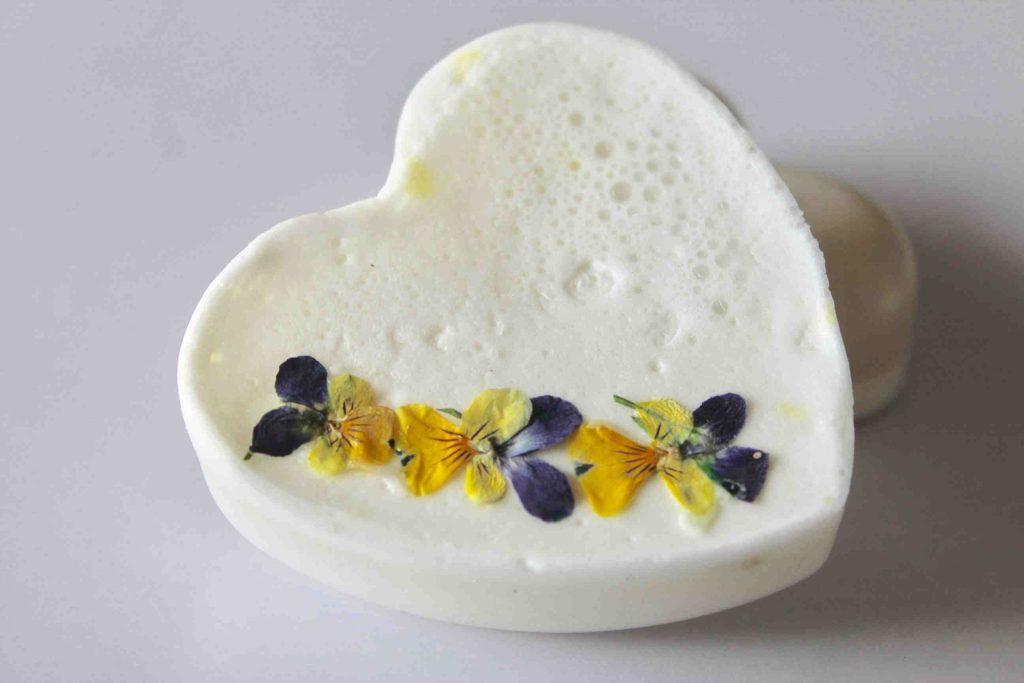
How to Choose a Baby Soap
There is no single baby soap that is perfect for every child. When choosing a product, consider the following.
1. Check the Complete Ingredient List
Read the full ingredient list before introducing a new soap. Look for ingredients that you are familiar with and consider whether your baby has previously reacted to any particular ingredient.
2. Consider Fragrance
Some baby soaps contain essential oils or other fragrance ingredients. If you prefer a minimally fragranced bathing routine, check the product information carefully.
3. Look at the Soap Formulation
Different baby soaps can have different bases and ingredient combinations. Glycerin, plant oils and botanical ingredients are commonly found in handmade soap formulations.
4. Consider Your Baby’s Age
Not every soap is suitable for newborns, infants or older children. Follow the manufacturer’s recommended age guidance and speak with your pediatrician if you are uncertain about introducing a particular personal-care product.
5. Introduce New Products Carefully
When introducing a new personal-care product, consider using a small amount first and observe how your baby’s skin responds.
If irritation occurs, discontinue use and seek appropriate medical advice if needed.
Ingredients Commonly Found in Handmade Baby Soaps
Glycerin
Glycerin is commonly used in soap and personal-care formulations.
It can be found in many handmade soap products and is one ingredient parents may encounter when comparing baby soaps.
Plant Oils
Plant oils such as coconut oil and olive oil are commonly used in handmade soap-making.
The combination and concentration of oils varies between formulations.
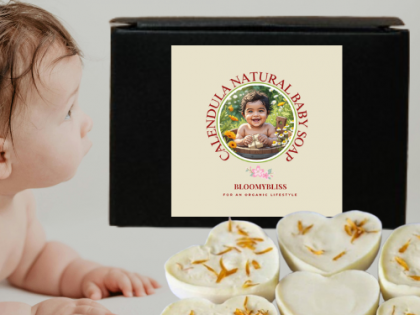
Calendula
Calendula is a traditional botanical ingredient frequently used in personal-care products.
In handmade soap, calendula may appear as petals, powder, extract or another botanical preparation depending on the formulation.
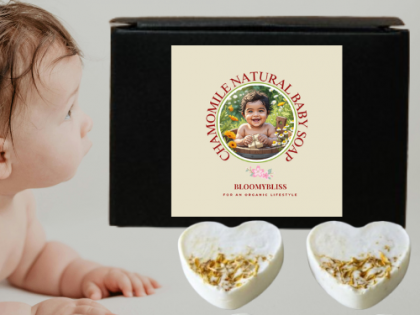
Chamomile
Chamomile is another well-known botanical ingredient used in personal-care products.
Parents interested in botanical formulations may encounter chamomile in handmade baby soap.
Aloe Vera
Aloe vera is widely used in skincare and personal-care products.
When present in baby soap, check the complete formulation rather than evaluating the product based solely on aloe vera.
Rose
Rose petals and rose-derived ingredients are used in a variety of botanical personal-care products.
As with any ingredient, individual tolerance should be considered when choosing a baby product.
Natural Baby Soap vs Conventional Baby Soap
The terms “natural” and “conventional” describe different approaches to formulation and sourcing.
A natural baby soap may emphasize botanical or naturally derived ingredients, while conventional baby products may use standardized formulations designed for consistency and mass production.
Neither label alone tells you whether a particular product is appropriate for your baby.
The complete formulation, ingredient list, product instructions and intended age group are more useful when making a decision.
Are Handmade Soaps Suitable for Babies?
This depends entirely on the individual product formulation and the baby’s age.
A soap being handmade does not automatically make it a baby product.
If you are choosing a handmade baby soap, check:
- Recommended age
- Complete ingredients
- Fragrance ingredients
- Directions for use
- Manufacturer information
For newborns or babies with ongoing skin concerns, it is sensible to discuss personal-care products with a pediatrician before introducing something new.
Natural and Organic Baby Soaps at BloomyBliss
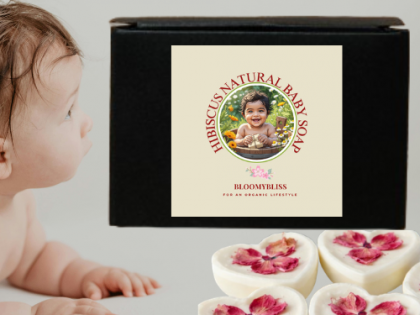
BloomyBliss offers a dedicated collection of natural and organic baby soaps featuring handmade formulations and botanical ingredients. Depending on the product, the collection may include ingredients such as calendula, chamomile, hibiscus, lavender, rose and other nature-inspired ingredients. Explore the BloomyBliss Natural & Organic Baby Soap collection to compare available products and their individual ingredient lists. Because each soap has its own formulation, we recommend reviewing the product details before choosing one for your baby’s bathing routine.
How to Build a Simple Baby Bathing Routine
A baby’s bathing routine does not need to be complicated. A simple routine can include:
- Use comfortably warm water.
- Use a suitable baby bathing product when needed.
- Avoid excessive washing.
- Rinse the skin thoroughly.
- Gently pat the skin dry.
- Observe how your baby’s skin responds to new products.
If your baby develops persistent redness, irritation, a rash or another skin concern, consult an appropriate healthcare professional rather than relying on soap or skincare products to treat the condition.
What Makes a Good Baby Soap?
Instead of looking for a soap with the longest list of ingredients or the strongest marketing claims, focus on the fundamentals.
A good baby soap should have:
A clearly stated formulation + transparent ingredients + appropriate product guidance + a format suitable for the baby’s age and bathing routine.
Your baby’s individual response is also important.
FAQ
What is a handmade baby soap?
A handmade baby soap is a handcrafted soap formulated for baby bathing. Depending on the product, it may contain plant oils, glycerin, botanical ingredients, flowers, herbs and other soap-making ingredients.
What should I look for in a natural baby soap?
Look at the complete ingredient list, fragrance ingredients, recommended age, directions for use and the overall formulation.
Is handmade soap safe for babies?
Safety depends on the individual product formulation, intended age and the baby’s individual sensitivity. Handmade does not automatically mean that a soap is suitable for every baby.
What ingredients are commonly found in baby soap?
Depending on the formulation, baby soaps may contain plant oils, glycerin, botanical ingredients such as calendula or chamomile, and other soap-making ingredients.
Can newborns use handmade baby soap?
Not every handmade baby soap is appropriate for newborns. Check the manufacturer’s age guidance and consult a pediatrician if you are uncertain about introducing a new product.
Is natural soap better for baby skin?
There is no universal answer. “Natural” does not automatically mean better or more suitable for every baby. The complete formulation and individual tolerance are more important.
How often should babies use soap?
Babies generally do not need excessive washing with soap. Follow age-appropriate bathing guidance and your healthcare professional’s advice, particularly for newborns.
Where can I buy natural and organic baby soaps?
You can explore the BloomyBliss Natural & Organic Baby Soap collection and review each product’s ingredients and formulation before choosing a product.